The Psychology of the Hundred Acre Wood: Mental Illness in Winnie the Pooh
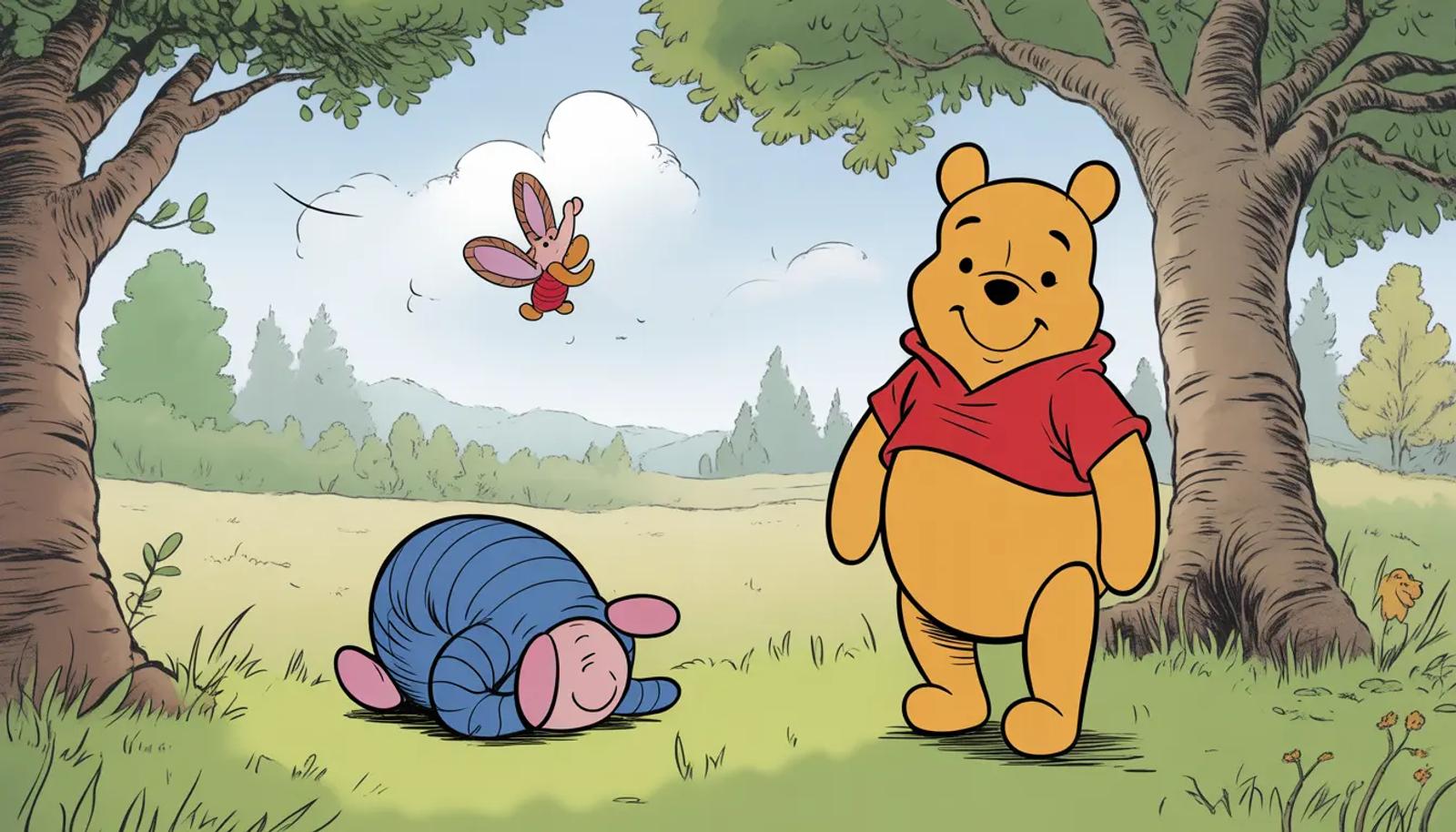
For decades, the residents of the Hundred Acre Wood have been more than just childhood companions; they have become icons of various personality types and temperaments. However, a deeper look reveals that A.A. Milne’s creations might be mirrors of the human psyche in ways many of us never realized as children. In the year 2000, a group of pediatricians and researchers published a seminal (and somewhat playful yet profound) paper in the Canadian Medical Association Journal (CMAJ) titled "Pathology in the Hundred Acre Wood." This study sparked a global conversation: Could Winnie the Pooh and his friends actually be representations of specific mental health disorders?
At Mental Wellness Apps, we believe that destigmatizing mental health starts with understanding. By looking at these beloved characters through a clinical lens, we can foster empathy and start vital conversations about neurodiversity and emotional well-being.
1. Winnie the Pooh: ADHD (Inattentive) and Binge Eating Disorder
Winnie the Pooh, the "Bear of Very Little Brain," is the heart of the Hundred Acre Wood. While his slow-paced, honey-loving nature is endearing, researchers have pointed to several traits that align with Attention-Deficit/Hyperactivity Disorder (ADHD), specifically the inattentive subtype.
Pooh is famously forgetful, easily distracted by "a little smackerel of something," and often finds himself lost in thought, trailing off in the middle of a sentence. His obsession with honey also raises questions about Binge Eating Disorder (BED). His "hunny" fixations are not merely about hunger; they represent a repetitive, impulsive behavior that often leads to him getting stuck in tight places (literally and figuratively).
"Pooh hasn't much Brain, but he never comes to any harm. He does silly things and they turn out right." — A.A. Milne
Character Summary Table
2. Piglet: Generalized Anxiety Disorder (GAD)
Piglet is perhaps the most obvious representation of a mental health condition in the series. His constant state of "Oh, d-d-d-dear" is a classic manifestation of Generalized Anxiety Disorder (GAD).
Piglet lives in a state of hyper-vigilance. Every rustle in the grass is a "Heffalump" or a "Woozle." His physical symptoms often include stuttering and trembling—common somatic expressions of intense anxiety. Despite this, Piglet offers a profound lesson in bravery: true courage isn't the absence of fear, but acting in spite of it.
3. Eeyore: Persistent Depressive Disorder (Dysthymia)
Eeyore is the quintessential face of depression. Unlike a temporary "bout of the blues," Eeyore’s gloom is chronic. In clinical terms, this most closely resembles Persistent Depressive Disorder (PDD), or Dysthymia.
He speaks slowly, expects the worst, and often feels overlooked. Interestingly, the other characters never try to "fix" Eeyore. They accept him exactly as he is, inviting him along on adventures regardless of his mood. This is a beautiful representation of peer support—which is exactly what we aim to provide through our Mood Tracking Tools.
4. Tigger: ADHD (Hyperactive-Impulsive Subtype)
If Pooh represents the inattentive side of ADHD, Tigger is the poster child for the hyperactive-impulsive subtype. Tigger cannot sit still; he bounces because "that's what Tiggers do best."
His impulsivity often leads him into dangerous situations, such as getting stuck in a tree. He lacks a "filter" and often intrudes on the space of others (especially Rabbit). While Tigger's energy is infectious, it also highlights the exhaustion that can come with living in a body that feels like it’s "driven by a motor."
5. Rabbit: Obsessive-Compulsive Disorder (OCD)
Rabbit’s world is one of order, schedules, and meticulous gardening. When something disrupts his plan—whether it's Tigger bouncing through his garden or Pooh getting stuck in his doorway—Rabbit experiences intense distress.
This "need for symmetry" and rigid adherence to rules are hallmarks of Obsessive-Compulsive Disorder (OCD). Rabbit isn't just "neat"; his anxiety is tied to his ability to control his environment.
6. Owl: Dyslexia and Cognitive Issues
Owl is the resident intellectual, but he has a secret: he often struggles with spelling and reading. His "wise" persona is a compensatory mechanism for what many theorists believe is Dyslexia.
Furthermore, Owl’s tendency to ramble about "Great Uncle Robert" and lose track of his own stories has been linked to age-related cognitive decline or short-term memory impairment. He represents the pressure many feel to "appear" competent even when struggling with invisible learning disabilities.
7. Kanga and Roo: Social Anxiety and Developmental Concerns
Kanga is the "perfect" mother, but her overprotectiveness of Roo is extreme. Some psychologists suggest she represents Social Anxiety Disorder, projecting her fears onto her child to keep him safe from the "dangerous" world.
Roo, on the other hand, is a child whose environment is strictly controlled. His curiosity vs. his mother's fear creates a dynamic that psychologists often study in the context of childhood development and the potential for Autism Spectrum Disorder (ASD) traits, particularly in his occasional obliviousness to social cues and singular focus on his mother's pouch.
8. Christopher Robin: The Schizophrenia Theory
The most "radical" theory in the CMAJ paper is that Christopher Robin himself might be experiencing Schizophrenia. The theory suggests that the animals aren't just toys, but manifestations of his internal states or different aspects of his personality.
Alternatively, it is argued that he simply has a vivid imagination—a healthy part of childhood. However, the lack of adult supervision in the stories often points toward a child who is creating a world to cope with loneliness or a lack of parental presence.
Real-World Impact
While it is important to remember that A.A. Milne likely did not set out to create a diagnostic manual for the Hundred Acre Wood, the relatability of these characters is undeniable.
According to the World Health Organization (WHO), 1 in 8 people globally live with a mental disorder. Using stories like Winnie the Pooh helps us:
- Reduce Stigma: If we can love Eeyore while he's depressed, we can love ourselves and our neighbors during their dark times.
- Foster Early Detection: Parents might see Piglet's anxiety or Tigger's hyperactivity and realize these are real challenges that require professional support.
- Encourage Community: Just like the characters support each other, we need digital and physical communities to thrive.
Conclusion
The Winnie the Pooh mental illness theory isn't about pathologizing our childhood favorites. It's about finding ourselves in the stories we love. Whether you feel like a "Pooh" some days—distracted and hungry—or an "Eeyore"—feeling the weight of the world—know that you are not alone.
At mentalwellnessapps.com, we provide the tools to help you navigate your own "Hundred Acre Wood." From anxiety management to mood tracking, we are here for your journey.
Sources:
- Shea, S. E., et al. (2000). "Pathology in the Hundred Acre Wood: a neurodevelopmental perspective on A.A. Milne." Canadian Medical Association Journal.
- World Health Organization (WHO). Mental Health Statistics.
- American Psychiatric Association. Diagnostic and Statistical Manual of Mental Disorders (DSM-5).
Safety Notice
This educational content is not a substitute for professional medical advice, diagnosis, or treatment. Call 911 or your local emergency number if you are in crisis.
About the author

Mahendra Balal
Founder & Mental Wellness Advocate
Mahendra Balal is a dedicated Founder & Mental Wellness Advocate committed to providing evidence-based insights and support for mental wellness.