Is Behavioral Health the Same as Mental Health?
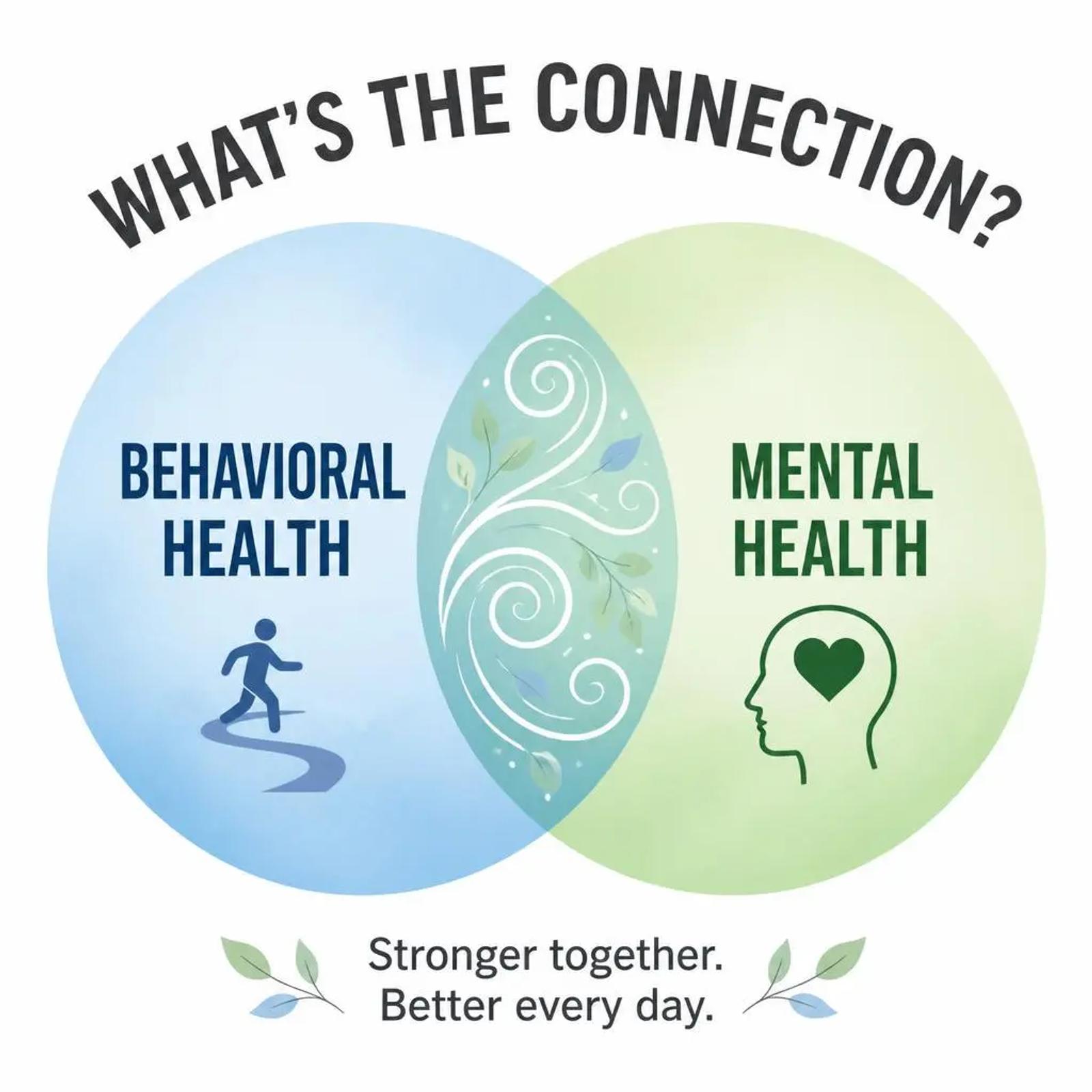
Short answer: not exactly. Mental health is part of behavioral health, but behavioral health is broader. Mental health usually refers to your emotional, psychological, and social well-being, including conditions like anxiety, depression, bipolar disorder, PTSD, and schizophrenia. Behavioral health includes mental health plus the everyday behaviors that affect health, such as sleep, substance use, eating patterns, exercise, stress habits, medication adherence, social connection, and coping routines.
A simple way to say it: mental health is what you think and feel; behavioral health includes what you think, feel, and repeatedly do.
This distinction matters because many people search for “mental health help” when the real path forward may also involve behavioral patterns: poor sleep, alcohol use, burnout habits, avoidance, isolation, chronic stress, or difficulty following a care plan. Likewise, someone may search for “behavioral health” and actually need therapy, psychiatric care, crisis support, or a structured mental health assessment.
This guide explains the difference in plain language, when the terms overlap, and how to choose the right kind of support.
What Is Mental Health?
The World Health Organization describes mental health as a state of mental well-being that helps people cope with stress, realize abilities, learn, work, and contribute to community life. It is not just the absence of a mental disorder. Source: WHO mental health fact sheet.
Mental health includes:
- Mood and emotional regulation
- Anxiety, fear, worry, and panic
- Self-esteem and identity
- Thought patterns
- Trauma responses
- Relationships and attachment
- Concentration and motivation
- Sense of meaning, safety, and hope
Mental health care often includes therapy, counseling, psychiatric evaluation, medication management, crisis care, support groups, and self-guided tools. If you are unsure where to begin, Mental Wellness Apps offers free tools such as the depression screening, anxiety relief tool, and free mental health tools.
Common Mental Health Examples
Mental health concerns can be mild, moderate, severe, short-term, or long-term. Examples include:
- Depression
- Generalized anxiety
- Panic attacks
- Social anxiety
- Obsessive-compulsive symptoms
- Post-traumatic stress
- Eating disorders
- Bipolar disorder
- Psychosis
- Grief and adjustment stress
- Burnout-related emotional exhaustion
According to the National Institute of Mental Health, more than 1 in 5 U.S. adults live with a mental illness. Source: NIMH mental illness statistics.
What Is Behavioral Health?
Behavioral health is a broader term. It looks at how behaviors affect mental and physical well-being. SAMHSA uses behavioral health to include mental health, substance use, life stressors, crises, and stress-related physical symptoms. Source: SAMHSA behavioral health.
Behavioral health includes mental health, but it also includes patterns like:
- Sleep habits
- Alcohol, nicotine, cannabis, or drug use
- Eating behaviors
- Exercise and movement
- Stress coping
- Social isolation or connection
- Screen use and routines
- Medication adherence
- Self-care routines
- Risk-taking or avoidance behaviors
- Chronic disease self-management
This is why many clinics, hospitals, insurers, and public health agencies use the phrase “behavioral health.” It gives providers a wider lens. For example, a person may come in for depression, but the full picture may include poor sleep, heavy drinking, loneliness, chronic pain, financial stress, and missed medication.
Behavioral Health Example
Imagine someone says, “I feel anxious all the time.”
A mental health lens may ask:
- Are these symptoms consistent with generalized anxiety disorder?
- Are there panic attacks?
- Are there trauma triggers?
- Would therapy or medication help?
A behavioral health lens asks those questions too, but also looks at:
- How much caffeine are they drinking?
- Are they sleeping five hours a night?
- Are they avoiding bills, calls, or work tasks?
- Are they using alcohol to calm down?
- Are they isolated?
- Are they skipping meals?
- Are they moving their body?
- Are they practicing any coping skills?
Both lenses are valuable. Behavioral health simply widens the map.
Behavioral Health vs. Mental Health: Key Difference
Mental health focuses on emotional and psychological well-being. Behavioral health focuses on the connection between behavior, mental well-being, substance use, physical health, and daily functioning.
Why People Confuse Behavioral Health and Mental Health
The terms are often used interchangeably because the care systems overlap. A therapist may work in a “behavioral health clinic.” An insurance card may list “behavioral health benefits.” A primary care doctor may refer someone to “behavioral health” for depression, anxiety, insomnia, or substance use.
The confusion is understandable. In everyday conversation, “mental health” feels more familiar. In healthcare systems, “behavioral health” is often the administrative or clinical umbrella.
H4: The Practical Difference
If you are talking to a friend, “mental health” is usually clear.
If you are looking for services, “behavioral health” may return broader options, including:
- Therapy
- Psychiatry
- Addiction treatment
- Integrated primary care support
- Case management
- Crisis stabilization
- Intensive outpatient programs
- Sleep or stress behavior programs
H5: Search Tip
If you need therapy, search “mental health therapist near me” or “counseling for anxiety.” If substance use, sleep, stress habits, or chronic health routines are involved, also search “behavioral health services near me.”
H6: Safety Note
If there is immediate danger, thoughts of suicide, or risk of harm, call or text 988 in the U.S. and Canada, or use local emergency services. Learn more at the 988 Lifeline. Mental Wellness Apps also has a crisis support page.
Real-World Examples
Example 1: Depression and Sleep
A person with depression may have low mood, guilt, low motivation, and loss of interest. That is mental health. But if they also sleep during the day, stop exercising, skip meals, and withdraw from friends, those are behavioral health factors.
Treatment may include therapy for depression, but also behavioral activation: small planned activities that rebuild routine and reward. The depression screening tool can help someone reflect on symptoms, but it does not replace a licensed clinician.
Example 2: Anxiety and Avoidance
A person with anxiety may worry constantly. That is mental health. But avoidance can become the behavioral loop that keeps anxiety alive. Avoiding calls, emails, social plans, driving, conflict, or medical appointments can reduce fear short term while making life smaller long term.
Support may include cognitive behavioral therapy, exposure-based strategies, breathing tools, sleep changes, and caffeine reduction. The anxiety relief tool can be a useful starting point for immediate grounding.
Example 3: Alcohol Use and Mood
Alcohol can worsen sleep, anxiety, mood instability, and medication side effects. A person may describe the problem as “stress” or “depression,” but behavioral health care may screen for substance use too. This does not mean the person is being judged. It means the care plan is more complete.
SAMHSA reports that millions of Americans experience mental health and substance use concerns, and integrated care is often important. Source: SAMHSA National Survey on Drug Use and Health.
Why the Difference Matters for Treatment
The difference is not just vocabulary. It changes the care plan.
Mental health care may ask, “What are you feeling, thinking, remembering, fearing, or grieving?”
Behavioral health care also asks, “What are you doing each day that may be helping or hurting your health?”
That broader view can uncover practical levers for change:
- Stabilizing sleep
- Reducing alcohol or drug use
- Building predictable routines
- Practicing emotional regulation
- Reconnecting socially
- Moving the body safely
- Improving nutrition consistency
- Creating a crisis plan
- Following medication instructions
- Tracking symptoms over time
This is why behavioral health is often integrated into primary care. A patient with diabetes, heart disease, chronic pain, insomnia, or high blood pressure may also benefit from support around stress, mood, habits, and adherence.
Is Behavioral Health More “Serious” Than Mental Health?
No. One term is not more serious than the other.
Mental health can include severe, life-threatening conditions. Behavioral health can include mild habit changes or intensive addiction treatment. The seriousness depends on the person’s symptoms, risk level, impairment, and support needs.
A person with mild stress may benefit from behavioral coaching and self-guided tools. A person with suicidal thoughts, psychosis, severe depression, mania, trauma symptoms, or dangerous substance withdrawal needs urgent professional care.
When to Seek Mental Health Support
Consider mental health support when you notice:
- Persistent sadness, emptiness, or hopelessness
- Panic attacks or constant worry
- Loss of interest in things that used to matter
- Intrusive memories or trauma symptoms
- Thoughts of self-harm
- Mood swings that disrupt life
- Difficulty functioning at work, school, or home
- Feeling detached, numb, or unreal
- Hearing or seeing things others do not
- Eating disorder symptoms
You can start with educational tools, but strong or worsening symptoms deserve professional evaluation. A primary care doctor, licensed therapist, psychiatrist, or community mental health center can help.
When to Seek Behavioral Health Support
Behavioral health support may be especially useful when your habits are part of the problem:
- You cannot sleep consistently
- You use alcohol, cannabis, nicotine, or drugs to cope
- Stress eating or appetite loss is affecting health
- You avoid important responsibilities
- You isolate even when lonely
- You struggle to take medication as prescribed
- Chronic illness feels harder because of stress
- Burnout has changed your routines
- You repeat coping patterns that help briefly but hurt later
For burnout-related concerns, see emotional exhaustion and burnout recovery. For self-awareness, read mental wellness insight.
What Kind of Provider Should You Choose?
You do not need to know the perfect label before asking for help. Start with the concern that feels most urgent.
You can also use the SAMHSA treatment locator to search for mental health and substance use services in the United States.
Why This Explanation Is Trustworthy
This article uses definitions and public health framing from established health authorities, including WHO, SAMHSA, NIMH, and 988 Lifeline resources. It is written for education, not diagnosis. Mental Wellness Apps provides self-guided tools and support content, but these tools are not a replacement for therapy, emergency care, or individualized medical advice.
A trustworthy article on this topic should be clear about three things:
- Mental health is a core part of behavioral health.
- Behavioral health includes daily behaviors and substance use patterns that affect well-being.
- People should seek professional or crisis support when symptoms are severe, unsafe, or interfering with daily life.
Frequently Asked Questions
Is behavioral health the same as mental health?
No. Mental health is part of behavioral health. Behavioral health includes mental health plus behaviors such as sleep, substance use, eating, exercise, coping habits, and medication adherence.
Why do clinics say behavioral health instead of mental health?
Many clinics use “behavioral health” because they treat a broader range of concerns, including depression, anxiety, addiction, stress-related health problems, and lifestyle behaviors that affect medical conditions.
Does behavioral health include therapy?
Yes. Behavioral health care can include therapy, counseling, psychiatry, addiction treatment, care coordination, crisis care, and habit-focused interventions.
Does mental health include substance use?
Substance use and mental health often overlap, but many systems classify substance use treatment under behavioral health. Someone can have both a mental health condition and a substance use disorder.
Which term should I use when asking for help?
Use the term that matches your need. If you want therapy for emotions, thoughts, anxiety, trauma, or depression, “mental health care” is clear. If habits, substance use, sleep, stress routines, or chronic health behaviors are involved, “behavioral health” may help you find broader services.
Bottom Line
Behavioral health and mental health are closely related, but they are not identical. Mental health focuses on emotional and psychological well-being. Behavioral health includes mental health and the behaviors that shape overall health.
If you are struggling, you do not need to choose the perfect term before getting support. Start with what is happening in your life: how you feel, what has changed, what patterns are making things harder, and whether you feel safe. From there, the right care can become clearer.
Safety Notice
This educational content is not a substitute for professional medical advice, diagnosis, or treatment. Call 911 or your local emergency number if you are in crisis.
About the author

Mahendra Balal
Founder & Mental Wellness Advocate
Mahendra Balal is a dedicated Founder & Mental Wellness Advocate committed to providing evidence-based insights and support for mental wellness.